Sealed
Worth tryingFs, Qts and Vas allow a sealed-box calculation. Qts is below 0.707, so a Qtc 0.707 target may be explored; actual size and output limits still matter.
Fs 70 Hz · Qts 0.44 · Vas 15.7 LFaitalPRO
Woofer · — · —
FaitalPRO FaitalPRO | 低音喇叭单元 | 8FE300: Woofer. Published Fs 70 Hz, Qts 0.44 , Vas 15.7 L. Explore these values before choosing an enclosure.
What this driver's data tells us
FaitalPRO FaitalPRO | 低音喇叭单元 | 8FE300 is a Woofer. Its available data describe the following design trade-offs.
With Fs 70 Hz, Qts 0.44 and Vas 15.7 L, an ideal maximally flat sealed reference (Qtc 0.707) is approximately 9.9 L, with a −3 dB cutoff of 112.5 Hz.
This reference is compact (up to 10 L); judge its usefulness together with the cutoff above.
The calculated sealed cutoff exceeds 90 Hz. This reference is better viewed as a satellite or midbass starting point than a deep-bass solution.
Qts 0.44 leaves both sealed and vented designs worth comparing. Select between them using the required size and simulated bass response.
No confirmed sensitivity reference is available, so relative loudness for the same input cannot be assessed here.
Calculated from published parameters; this is not a listening review. Box sizes are net acoustic volume for one driver. Room gain, EQ, damping material and construction losses are excluded.
Voltage-to-power conversion uses nominal impedance. These size, cutoff and sensitivity bands are editorial guides, not audio-quality standards.
Driver character card
These bars show physical quantities, not sound-quality scores. A longer bar is not always better. Open a stat to learn what it means.
The driver's free-air resonance. A lower value can help a bass design, but the enclosure, excursion and response determine usable bass. It is not the finished speaker's bass cutoff.
Output at the manufacturer's stated input and distance. 1 W and 2.83 V are different references for many impedances. This card keeps the original value and reference; it is not an efficiency or sound-quality rating.
Electrical and mechanical damping combined. Lower values indicate stronger damping at resonance. It helps choose an enclosure alignment, but does not tell you whether the sound is fast, warm or detailed.
The volume of air with the same compliance as the suspension. It is not a recommended box volume. Use it together with Fs and Qts.
Published linear excursion. Definitions differ between manufacturers; verify one-way versus peak-to-peak values. It does not by itself predict distortion or maximum safe output.
Effective radiating area, not the frame's outside diameter. It helps estimate how much air a cone moves when combined with excursion.
Sensitivity reference: Nominal (reference unverified)
Screening guidance from the available parameters, not a guarantee. A manufacturer's exact-model enclosure plan takes priority. Listening quality cannot be ranked from T/S parameters.
Fs, Qts and Vas allow a sealed-box calculation. Qts is below 0.707, so a Qtc 0.707 target may be explored; actual size and output limits still matter.
Fs 70 Hz · Qts 0.44 · Vas 15.7 LQts lies in a commonly explored low-to-moderate range. Try box volume and tuning together, and check the response, port speed and cone excursion below tuning.
Fs 70 Hz · Qts 0.44 · Vas 15.7 LFs helps set a starting length, but taper, area, driver position and damping determine the result. There is no universal Qts pass/fail rule.
Fs 70 Hz · Qts 0.44Use an exact-model manufacturer plan or a dedicated horn model. Qts alone cannot establish suitability. Throat, mouth, path and rear chamber must be designed together; this page does not simulate horns.
Fs 70 Hz · Qts 0.44The line and outlet act together. Tube length, area, damping and port mass require a coupled model; a bass-reflex preset is not an MLTL design.
Fs 70 Hz · Qts 0.44Potentially useful when a practical port is difficult, but the passive radiator's area, mass, compliance and excursion must be matched separately.
Fs 70 Hz · Qts 0.44Two chambers and two ducts interact. Check their combined resonances with the dedicated model; these parameters alone do not establish an advantage over bass reflex.
Fs 70 Hz · Qts 0.44Front and rear bass cancel without an enclosure. Panel size, equalization and excursion matter. Low Qts is not an automatic rejection when EQ is available.
Fs 70 Hz · Qts 0.44Move the volume slider. Both curves use the same box volume; the bass-reflex tuning is adjustable.
Illustrative small-signal T/S models, not an optimized recommendation or a measured speaker. No room gain, diffraction, port losses, excursion limit or power compression is included. The initial tuning equals Fs and must be adjusted for a real build.
| Frequency (Hz) | Sealed (dB) | Bass reflex (dB) |
|---|---|---|
| 20 | -30 | -42.9 |
| 50 | -14.3 | -12 |
| 100 | -4.2 | -0.2 |
| 200 | -0.4 | 0.8 |
| 500 | -0 | 0.2 |
| 1000 | -0 | 0 |
Attributed summaries, not our listening test or a consensus score. The enclosure, crossover, room and listening level affect each review. Exact model and impedance are checked.
No exact-model listening review has been verified for this page yet. We do not infer tonal quality from T/S parameters or borrow reviews of similar model names.
Compare in USD, EUR or JPY. Prices exclude shipping.
Woofer10″ · 4 Ω
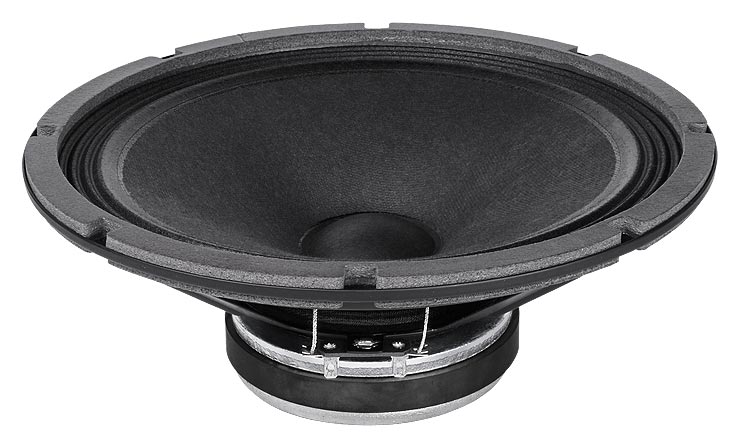 NO PHOTONo photo available
Woofer10″ · 8 Ω
Woofer10″ · 4 Ω
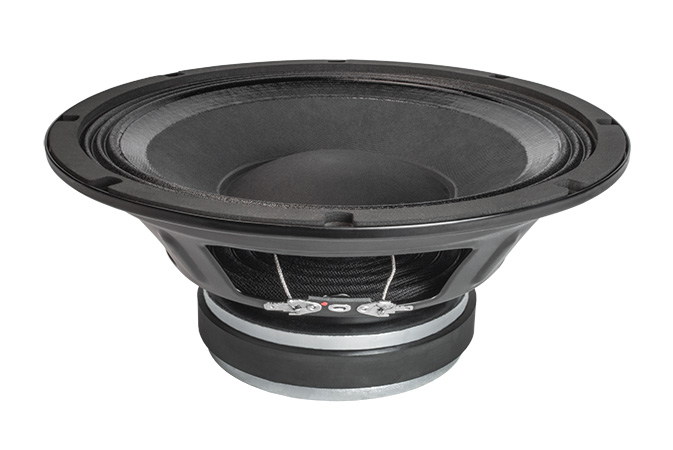 NO PHOTONo photo available
Woofer10″ · 8 Ω
Woofer10″ · 8 Ω
Woofer10″ · 4 Ω